A first drone should be easy to fly, forgiving of mistakes and good enough to bring back footage you’re proud of. Top speed and long feature lists matter much less than a few basics: how long it stays in the air, how steady the camera is, and how much help it gives you at the controls.
Flight time and batteries
Flight time per battery is the number that shapes every outing. Check the rated time, expect a little less in wind or cold, and plan on at least one spare battery so a session isn’t over after a single flight.
Camera and stabilization
Resolution gets the attention, but stabilization decides whether footage is usable. A camera mounted on a mechanical gimbal stays level and smooth as the drone moves, which makes a bigger difference than extra pixels.
Features that help beginners
GPS positioning lets the drone hold its place when you release the sticks. Return-to-home brings it back automatically if the signal drops or the battery runs low. Obstacle sensors add a safety margin while you’re still learning distances.
Size, weight and the rules
Small foldable drones are easier to carry and less intimidating to fly. Weight also affects the rules: in the US, recreational pilots must pass the free TRUST safety test, and drones weighing 250 grams or more must be registered with the FAA. Requirements can change, so check the FAA’s current guidance before your first flight.
First-drone checklist
- Flight time that suits your plans, plus a spare battery
- Gimbal-stabilized camera
- GPS hold and return-to-home
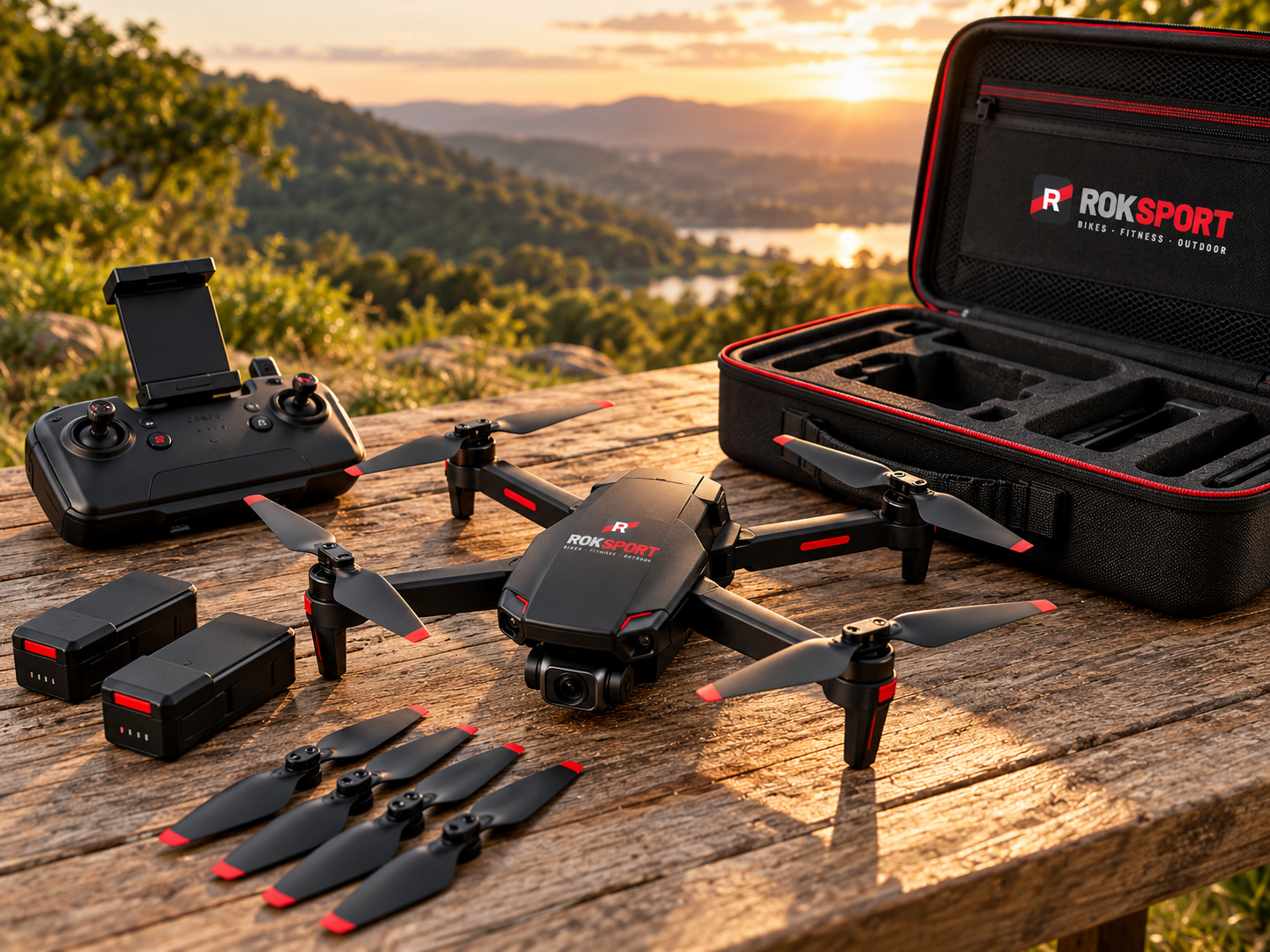
- Spare propellers and a carrying case
- Registration and safety test sorted before you fly
Ready to take off? Browse our drones, all with free shipping and 30-day returns.