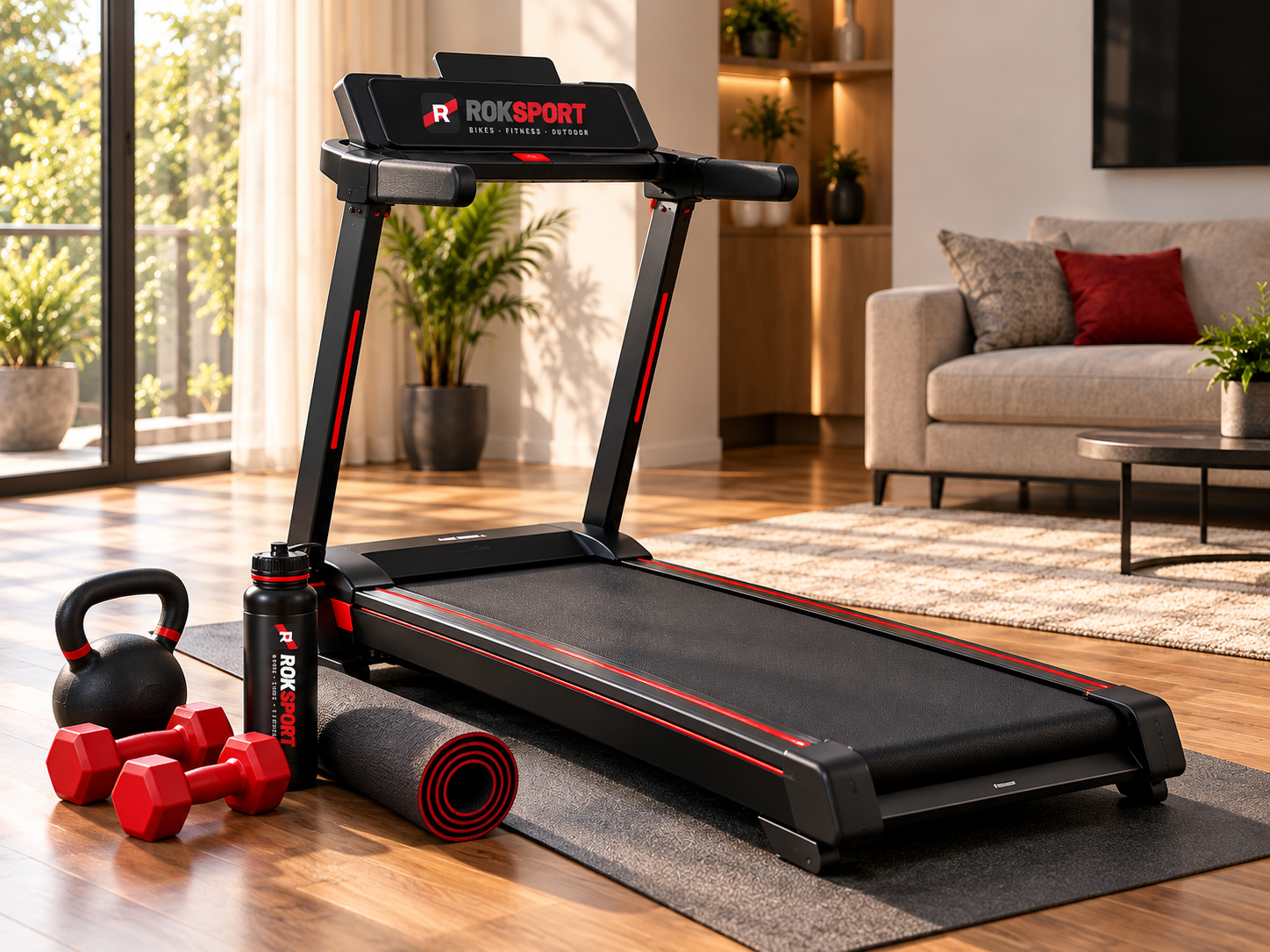
A treadmill is one of the biggest fitness purchases you’ll make for your home, and the right one depends far more on how you train than on how many features are on the screen. Before you compare prices, get clear on three things: who will use it, how fast they’ll go, and where it will live.
Start with the motor
Motor power is listed as continuous horsepower (CHP). As a rule of thumb, look for around 2.0 CHP for walking, 2.5 CHP for jogging and 3.0 CHP or more for regular running. A motor that’s too small for your pace runs hot and wears out sooner.
Check the belt size
A belt about 20 inches wide and 55 inches long suits walking and light jogging. Runners and taller users are more comfortable on a 60-inch belt, which leaves room for a full stride.
Cushioning, incline and weight capacity
Good deck cushioning takes stress off your knees and ankles, which matters most if you run several times a week. An incline range gives you harder workouts without more speed. For weight capacity, choose a model rated comfortably above the heaviest user, since a frame working near its limit feels less stable.
“Buy for the pace you train at today, not the one you hope to reach someday. A motor and belt matched to your real workouts will last longer and feel better.”
Measure your space first
Measure the floor area and the ceiling height, and remember you stand several inches higher on the deck. Leave clear space behind the belt for safety. If the room does double duty, a folding frame with transport wheels lets you store the treadmill upright between sessions.
Quick checklist
- Motor matched to your pace: walking, jogging or running
- Belt long enough for your stride
- Weight capacity above the heaviest user
- Footprint that fits your room, folded and unfolded
- Warranty terms for the motor and frame
Ready to compare models? Browse our treadmills, all with free shipping and 30-day returns.